CAREC Institute Hosts Workshop on Regional Transport Connectivity
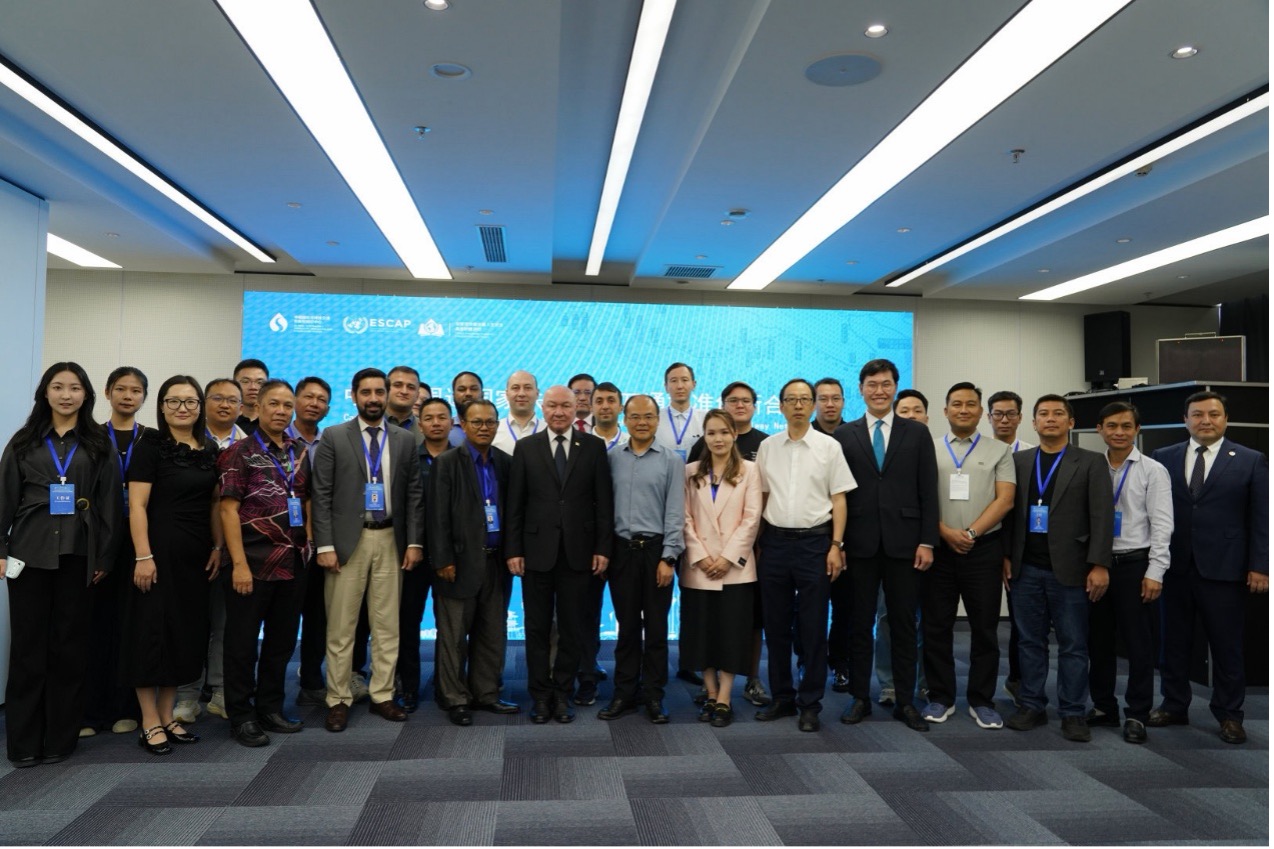
The CAREC Institute hosted a workshop at its Urumqi office on 17 July, as a key component of the “Global Sustainable Transport Humanities Exchange Advanced Training Program: Railway Interconnectivity Standard Innovation between China and Its Neighboring Countries”, organized by the China International Sustainable Transport Innovation and Knowledge Center. The event brought together representatives from transport authorities, railway operators, and academic institutions from CAREC member countries, including Azerbaijan, China, Kazakhstan, Mongolia, Pakistan and Tajikistan,as well as Russia and Southeast Asian countries such as Bangladesh, Cambodia, Laos, Malaysia, Myanmar, Thailand, and Vietnam. Participants exchanged insights on the “soft connectivity” of cross-border logistics to explore practical approaches for enhancing regional integration.
In his opening remarks, CAREC Institute Director Charymuhammet Shallyyev emphasized that true connectivity is driven by data, standards, and cooperation, noting that standards on paper mean little if reality is fragmented. Deputy Director One Dr. Li Kouqing echoed this, stressing that cooperation and seamless transportation and data connectivity are essential for turning transport corridors into economic corridors.
During the thematic sessions, Mr. Shallyyev noted that the Institute has long been engaged in research, policy dialogue, and training in transport and connectivity. He also announced a recent agreement to establish the Transport and Logistics Center in partnership with the Asian Development Bank. Mr. Shallyyev stated that the Center will leverage existing research and training resources to provide “soft support” for the region’s hard infrastructure, delivering knowledge services aligned with member countries’ needs and CAREC regional transport planning.
Dr. Ghulam Samad, Chief of the Research Division, presented the Institute’s latest findings on CAREC Corridor Performance Measurement and Monitoring, Containerization in CAREC, and E-Logistics and Corridor Digitalization research projects. He highlighted persistent gaps in infrastructure, customs efficiency, and digital integration, pointing to asymmetric transit times at adjacent border crossings as a challenge. Dr. Samad urged stakeholders to pursue coordinated investments, accelerate digital transformation across railway networks, and expand rolling stock capacity to meet the surging demands of transit trade. Delegates from Mongolia and Pakistan also shared firsthand insights into the current state of their national rail systems and the operational hurdles they face.
The workshop concluded with an in-depth dialogue on addressing the bottlenecks of “soft connectivity” in cross-border logistics, harmonizing regional policy coordination, and streamlining customs. Participants broadly noted that such knowledge sharing and experience exchange provide useful insights for improving future work.